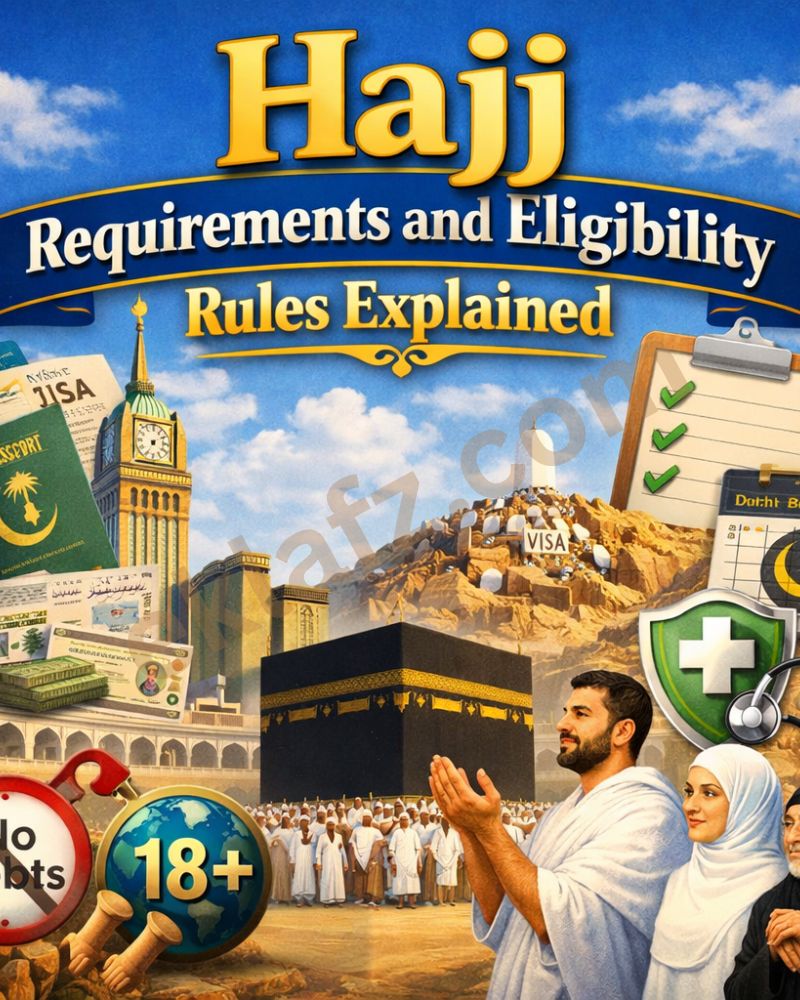
Hajj Requirements and Eligibility Rules Explained (Complete Guide)
Hajj is one of the most important acts of worship in Islam, but it is not obligatory for every Muslim under all circumstances. Islam has clear conditions that determine who must perform Hajj and when it becomes compulsory.
These requirements are designed to ensure that the pilgrimage is performed safely, responsibly, and without hardship beyond a person’s ability.
Who Is Eligible for Hajj in Islam?
In Islamic teachings, Hajj becomes obligatory only for Muslims who meet specific conditions. These conditions are based on physical ability, financial stability, and mental capacity.
A person must be a Muslim, an adult, and mentally sound. This means children or individuals who are not mentally capable are not required to perform Hajj.
The obligation applies only when a person is fully aware and capable of understanding and performing the rituals correctly.
Financial Requirement for Hajj
One of the most important conditions is financial ability (Istita’ah).
A person must have enough money to cover all Hajj expenses without causing financial hardship to their family. This includes travel costs, accommodation, food, and other necessary expenses.
Islam does not require borrowing money for Hajj. If someone cannot afford it without debt, then Hajj is not obligatory for them.
This rule ensures that the pilgrimage does not become a financial burden.
Physical and Health Requirements
Hajj is physically demanding, involving long walks, crowded environments, and hot weather conditions in Makkah.
Therefore, a person must be physically capable of completing the journey. Those who are seriously ill, extremely weak, or unable to travel safely are exempt until they recover.
Islam prioritizes health and does not impose hardship beyond a person’s capacity.
Legal and Travel Requirements (Visa & Permissions)
In modern times, performing Hajj also requires official permission from the Saudi government.
Pilgrims must obtain a valid Hajj visa and register through authorized channels in their country. Each country is given a limited quota, so early registration is often necessary.
Without proper documentation, entry into Makkah during Hajj season is not allowed.
Safety and Family Responsibility
Another important condition is ensuring family responsibilities are fulfilled.
A person must ensure that their dependents are financially and emotionally secure during their absence. If leaving causes harm or neglect to family obligations, Hajj may be delayed.
Islam encourages balance between worship and responsibility.
Timing and Opportunity
Hajj is only performed during specific days in the month of Dhul Hijjah.
A person must also have the opportunity to travel safely during this time. If travel is blocked due to war, restrictions, or extreme circumstances, Hajj is not immediately required.
This ensures safety and practicality in fulfilling the obligation.
When Does Hajj Become Mandatory?
Hajj becomes obligatory when all conditions are met at the same time:
- Being a Muslim adult
- Having mental and physical ability
- Having sufficient financial means
- Having safe travel arrangements
- Ensuring family responsibilities are covered
Once these conditions are fulfilled, delaying Hajj without valid reason is discouraged in Islamic teachings.
Understanding the Wisdom Behind Hajj Rules
The eligibility rules for Hajj reflect the mercy and balance of Islam. Hajj is not meant to be a burden, but a spiritual opportunity for those who are truly able.
By setting clear requirements, Islam ensures that pilgrims perform Hajj with sincerity, peace of mind, and full devotion to Allah.
نیت سچی ہو تو راستے خود بن جاتے ہیں
دل کے ارادے رب تک پہنچ جاتے ہیں
حج ہر کسی پر فرض نہیں ہوتا
یہ وہ سفر ہے جو نصیب سے مل جاتے ہیں
جب رب بلائے تو سب آسان ہو جاتا ہے
ورنہ خواہشیں بھی ادھوری رہ جاتی ہیں