Qurbani Rules in Islam – Complete Guide for Eid ul Adha
What is Qurbani?
Qurbani, also known as Udhiyah, is the sacred act of sacrificing an animal during Eid ul Adha to seek Allah’s pleasure. It commemorates the devotion of Prophet Ibrahim (AS), who was commanded to sacrifice his son. This practice is not merely cultural—it is a profound act of worship with clear rules, conditions, and spiritual lessons.
Who Must Perform Qurbani?
In Islam, Qurbani becomes wajib (necessary) for Muslims who meet specific conditions. It is required of adults who are mentally sound and financially capable. Financial ability is the key factor: if a person possesses wealth beyond their basic needs—similar to the threshold for Zakat—then Qurbani becomes obligatory. Children, the poor, and those unable to afford it are exempt, ensuring that the act remains a symbol of gratitude rather than hardship.
Financial Requirement
Islam emphasizes ease and balance. Qurbani is only required if one has savings or wealth beyond essential needs such as food, housing, and clothing. Borrowing money or falling into debt for the sake of sacrifice is not expected. This rule ensures that Qurbani remains a spiritual offering, not a financial burden.
Types of Animals Allowed
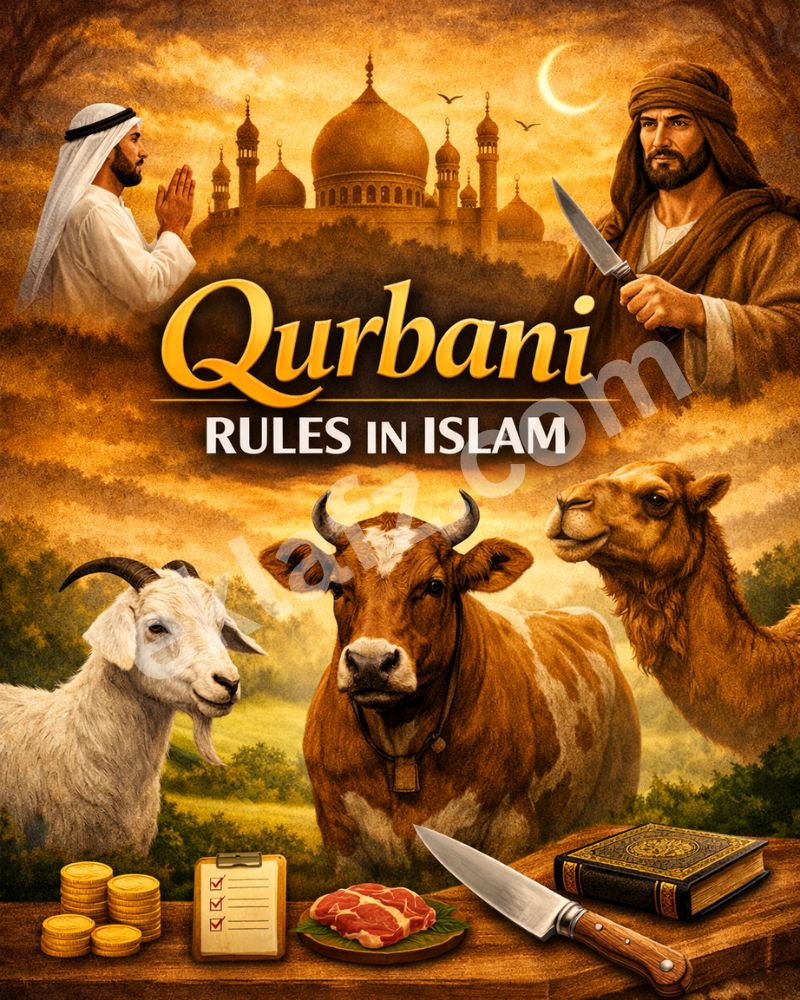
The animals eligible for sacrifice are clearly defined: goats or sheep must be at least one year old, cows or buffalo at least two years old, and camels at least five years old. The chosen animal must be healthy, well‑fed, and free from defects. Blind, lame, or severely ill animals are not acceptable, as dignity and quality are central to this act of worship.
Time of Qurbani
Timing is essential. Qurbani can only be performed after the Eid prayer on the 10th of Dhul Hijjah and continues until sunset on the 12th or 13th, depending on Islamic rulings. Sacrifices made before the Eid prayer are invalid, highlighting the importance of following prescribed conditions.
How Qurbani Should Be Performed
The sacrifice must be carried out with kindness and respect. The animal is gently laid facing the Qiblah, and the name of Allah is recited before slaughter: “Bismillah, Allahu Akbar.” Islam emphasizes mercy even in sacrifice, requiring a sharp knife to minimize suffering and ensuring the process reflects compassion.
Distribution of Qurbani Meat
After the sacrifice, the meat has to be divided into three portions: one for the family, one for relatives and friends, and one for the poor and needy. This division promotes charity, equality, and community support, reminding Muslims that Qurbani is not only about worship but also about sharing blessings.
Who is Exempt?
Certain individuals are exempt from Qurbani, including those who cannot afford it, travelers facing hardship, people in debt without surplus wealth, minors, and those who are mentally unfit. Islam consistently prioritizes ease and does not impose obligations that cause undue difficulty.
Spiritual Purpose of Qurbani
Beyond the physical act, Qurbani symbolizes the sacrifice of ego, pride, and selfish desires for the sake of Allah. It reflects the obedience of Prophet Ibrahim (AS) and Prophet Ismail (AS), teaching Muslims lessons of humility, gratitude, and submission to divine will.
Common Mistakes
Some common errors include:
- Performing Qurbani before the Eid prayer
- Selecting unhealthy animals
- Neglecting proper distribution of meat
- Treating the sacrifice as a mere cultural ritual.
Conclusively, understanding and following the correct rules ensures that the Qurbani is valid and accepted.
Urdu Poetry Reflection
قربانی کا اصل مطلب سمجھ لو یہ صرف جانور نہیں، دل کا سودا ہے ابراہیمؑ کی وفا کا یہ سبق ہے کہ رب کے آگے سب کچھ معمولی سا ہے جو رب کی رضا میں سب کچھ لٹا دے وہی اصل میں مومن اور سچا ہے
Conclusion
Qurbani in Islam is a sacred act of worship with clear rules and conditions. It is obligatory only for those who are financially capable and spiritually prepared. Through the legacy of Prophet Ibrahim (AS), Muslims learn that true sacrifice is about obedience and sincerity. It is beyond the slaughter of an animal. Overall, when performed correctly, Qurbani becomes a powerful act of faith, charity, and closeness to Allah.