Why Do Muslims Celebrate Eid ul Adha?
What is Eid ul Adha?
Eid ul Adha, known as the Festival of Sacrifice, is one of the two major Islamic celebrations observed by Muslims worldwide. It falls on the 10th of Dhul Hijjah, following the completion of Hajj. More than a cultural event, Eid ul Adha is a profound reminder of faith, obedience, and devotion to Allah — values that define the essence of Islam.
📜 Historical Reason Behind Eid ul Adha
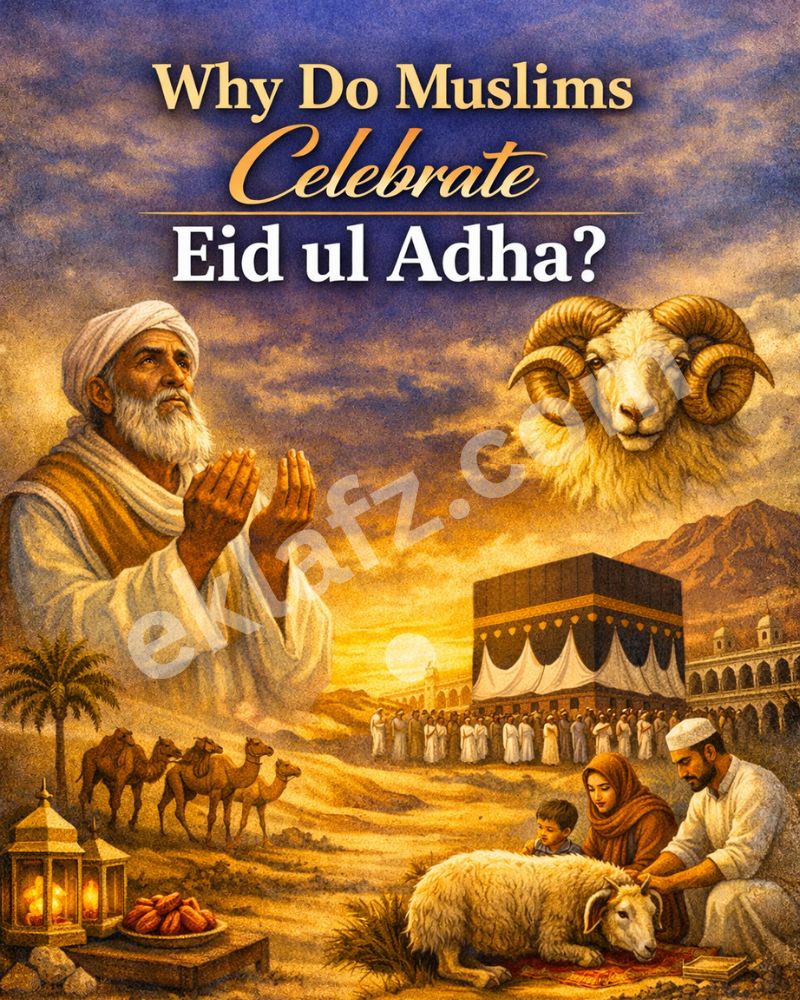
The story of Eid ul Adha originates from the unwavering faith of Prophet Ibrahim (AS). According to Islamic tradition, he saw a dream in which Allah commanded him to sacrifice his beloved son. Without hesitation, he prepared to fulfill the divine command. At the moment of sacrifice, Allah replaced his son with a ram, signifying that the test was about obedience, not loss. This act became a timeless symbol of submission and trust in Allah’s will.
👦 The Role of Prophet Ismail (AS)
Prophet Ismail (AS) played an equally vital role in this story. When his father shared the dream, he responded with patience and faith, encouraging him to obey Allah’s command. This exchange between father and son reflects complete surrender to divine will — a lesson in courage, trust, and spiritual maturity.
✨ What Eid ul Adha Represents
Eid ul Adha embodies the spirit of sacrifice and devotion. It reminds Muslims that true faith is demonstrated through action — by giving up personal desires for the sake of Allah. The festival teaches that obedience, humility, and gratitude are the foundations of spiritual success.
🐐 Why Do Muslims Perform Qurbani?
The ritual of Qurbani, or animal sacrifice, commemorates Prophet Ibrahim’s willingness to obey Allah’s command. Muslims around the world perform Qurbani during Eid ul Adha, distributing the meat among family, friends, and the poor. This act promotes compassion, equality, and generosity — values that strengthen community bonds and reflect the essence of Islamic charity.
🕋 Connection with Hajj and Dhul Hijjah
Eid ul Adha is deeply connected to Hajj, the annual pilgrimage to Mecca. It is celebrated right after the Day of Arafat, when pilgrims gather at Mount Arafat to seek forgiveness and spiritual renewal. The festival marks the completion of Hajj rituals and represents the spiritual climax of the Islamic year.
🌌 Spiritual Meaning of Eid ul Adha
Beyond the festivities, Eid ul Adha is a time for reflection and renewal. It encourages Muslims to sacrifice ego, pride, and material desires, focusing instead on faith and gratitude. The celebration unites believers across cultures and languages, reminding them that submission to Allah transcends all worldly differences.
📖 Lessons from Eid ul Adha
Eid ul Adha teaches obedience, patience, and sincerity. It reminds Muslims that everything belongs to Allah and that true success lies in surrendering to His will. The story of Prophet Ibrahim and Prophet Ismail continues to inspire believers to live with purpose, humility, and unwavering faith.
🕌 How Muslims Celebrate Eid ul Adha
The day begins with the Eid prayer, followed by the Qurbani ritual. Families gather to share meals, exchange greetings, and visit loved ones. While joy fills the air, the heart of the celebration remains rooted in worship, gratitude, and remembrance of Allah.
📝 Urdu Poetry Reflection
قربانی کا پیغام یہی سکھاتا ہے کہ بندہ رب کے حکم پر سب لٹا دیتا ہے ابراہیمؑ کی وہ عظیم وفا کی کہانی ہر دل کو ایمان کا راستہ دکھاتا ہے عید الاضحی صرف جشن نہیں ہے یہ بندگی کا سب سے حسین فسانہ ہے
✅ Conclusion
Eid ul Adha commemorates the unwavering faith of Prophet Ibrahim (AS) and the obedience of Prophet Ismail (AS). It is a festival of sacrifice, gratitude, and devotion — deeply intertwined with the spiritual journey of Hajj. Ultimately, Eid ul Adha reminds Muslims that true faith means surrendering everything for the sake of Allah.