Urdu Words for Poetry: The Beauty of Expression in Every Line
The Beauty of Urdu Words for Poetry
Urdu poetry has long been celebrated for its depth, beauty, and emotional expressiveness. Whether it’s a simple couplet or a deeply philosophical verse, Urdu words hold the magic to convey complex emotions in a way no other language can. Accordingly, at the heart of this art form are the unique and poetic words in Urdu, which form the foundation of beautiful poetry. In this blog post, we will explore some of the most commonly used Urdu words for poetry and how they contribute to the creation of unforgettable verses. Additionally, we will delve into various types of Urdu poetry, including sad Urdu poetry, Islamic poetry, and more.
Why Are Urdu Words So Special for Poetry?
Above all, Urdu is a language rich in literary tradition, and its words have an unmatched lyrical quality. The intricate phonetics and emotive sounds of Urdu make it ideal for expressing the subtleties of human emotions, whether it’s love, pain, or the fleeting nature of life. For poets, knowing the right Urdu words to use can make all the difference in crafting a verse that resonates deeply with the reader.
Popular Urdu Words for Poetry
Some words in Urdu have a certain musicality and emotion attached to them, making them ideal for poetry. Words like “dil” (heart), “ishq” (love), “jannat” (paradise), “khushbu” (fragrance), and “sannata” (silence) are regularly used in Urdu poetry. These words can evoke strong emotions, painting vivid pictures in the reader’s mind. Many poets also employ metaphors and similes, drawing from the beauty of nature and the human experience to convey deep meaning.
Exploring Different Types of Urdu Poetry
Sad Urdu Poetry: Words That Heal the Heart
Sad Urdu poetry has a special place in the hearts of many. These verses use simple yet impactful Urdu words to express sorrow, loneliness, and heartbreak. “Gham” (grief) and “udaasi” (sadness) are common in such poetry, painting the picture of a person in pain. However, the words often reflect the poet’s own sorrow, making it an intimate experience for the reader. Poems about lost love or the hardships of life often use these words to connect deeply with the audience.
Simple Poetry in Urdu: Minimal Yet Profound
Simple poetry in Urdu focuses on using fewer words to convey a profound meaning. A few carefully chosen Urdu words can speak volumes, making this style of poetry timeless and easily relatable. Even the most basic Urdu words like “dost” (friend) or “roshni” (light) can be used to convey complex emotions. Simple Urdu poetry is often the best form to introduce beginners to the beauty of the language.
Poetry About Life in Urdu: Reflections on Existence
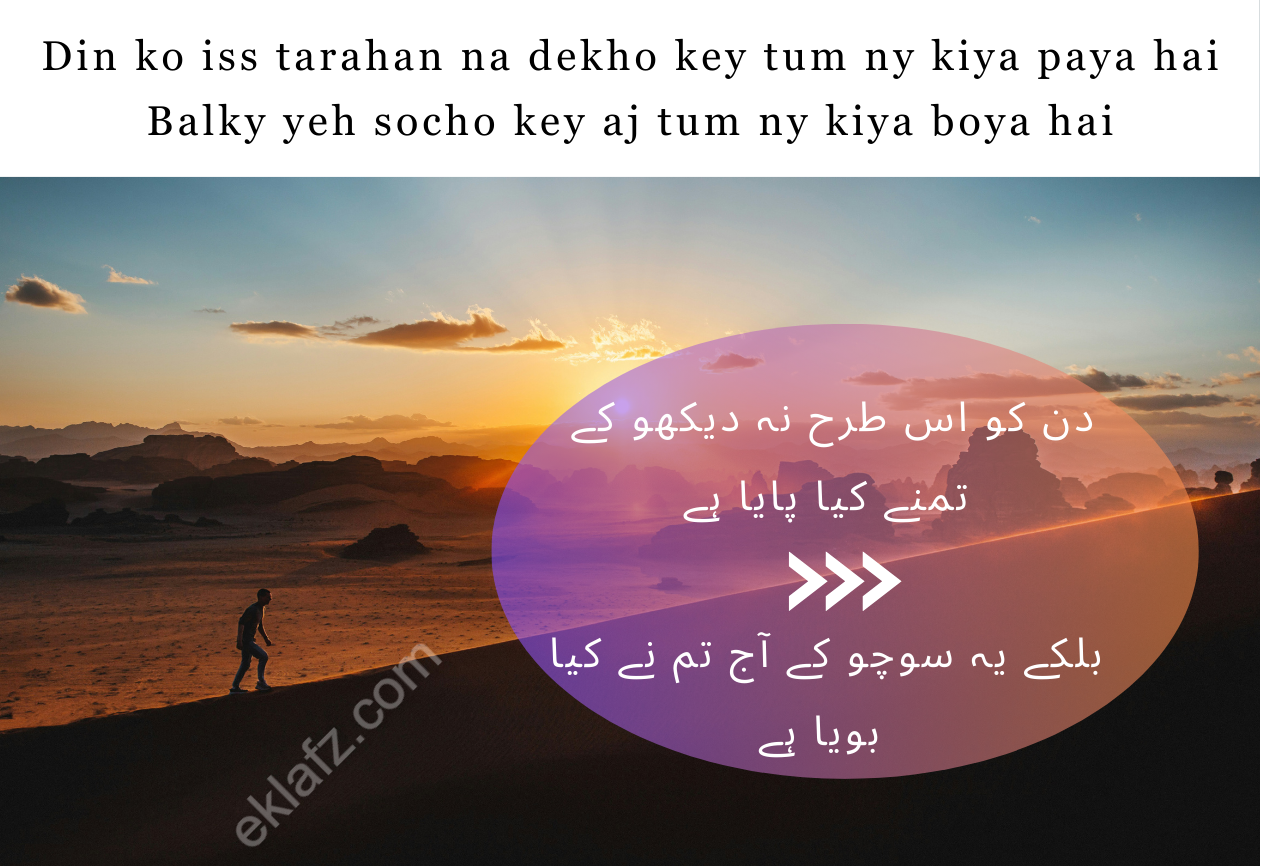
Urdu poetry about life often uses powerful words. Words like “zindagi” (life), “fateh” (victory), and “naseeb” (destiny) to reflect on the various facets of existence. Life, with all its struggles and triumphs, is a common theme in Urdu poetry. Poets frequently use these words to illustrate the journey of self-discovery and personal growth. “Waqt” (time) and “maktub” (written) are often employed to convey the idea that life is fleeting, and one should cherish each moment.
Islamic Poetry in Urdu: Spiritual and Reverent Verses
Islamic poetry in Urdu holds a special place in the hearts of many. Speaking of which, words such as “Ilah” (God), “iman” (faith), and “rahmat” (mercy) are used to express reverence, devotion, and spirituality. These verses often reflect a deep connection to God and the teachings of Islam. The beauty of Islamic poetry lies in its ability to inspire peace and contemplation in the hearts of its readers, making use of sacred words to elevate the soul.
Urdu Poetry on Eyes: A Window to the Soul
One of the most iconic themes in Urdu poetry revolves around the eyes. The word “aankhein” (eyes) has been used by poets for centuries. It symbolizes beauty, longing, and the emotions hidden within. Whether it’s the “narm” (soft) gaze of a lover or the “shauq” (desire) reflected in someone’s eyes, these words capture the essence of unspoken emotions. In Urdu poetry, poets often see eyes as a window to the soul, reflecting a person’s true feelings.
How Urdu Words Enhance the Power of Poetry
The beauty of Urdu poetry lies in its ability to express what words in other languages sometimes fail to convey. The richness of Urdu words makes it easier to craft verses that are deeply emotional, profound, and thought-provoking. Every word is carefully chosen. Its sound, meaning, and impact. Making Urdu poetry an art form in itself.
For aspiring poets, understanding the power of each word is crucial. Whether you’re writing sad poetry, Islamic poetry, or even simple poetry in Urdu, the right words can create an emotional experience for your readers. By focusing on the nuances of Urdu vocabulary, poets can bring their work to life in a way that captures the essence of the human experience.
Conclusion: The Enduring Magic of Urdu Words for Poetry
In conclusion, Urdu words for poetry are more than just symbols—they are the carriers of emotion, culture, and history. They bring poetry to life, giving each verse the ability to touch the heart of the reader. You should write about love, loss, life, or spirituality, the power of Urdu words cannot be underestimated.
Write your own poetry or delve deeper into the world of Urdu verses, keep exploring with these words. Let the beauty of the language guide you, and create poetry that resonates across time and space.