Chai Poetry in Urdu: Savoring Emotions, Memories, and Warmth
Tea, or chai, is more than just a beverage in Urdu-speaking cultures — it’s a symbol of warmth, hospitality, comfort, and reflection. Naturally, chai poetry in Urdu text has emerged as a charming literary niche, blending everyday emotions with the aroma, flavor, and rituals of tea.
From quiet mornings to lively gatherings, Urdu poets have immortalized chai as a muse for introspection, love, melancholy, and nostalgia. This blog explores the essence, themes, famous verses, and tips for writing your own chai-inspired poetry.
What Is Chai Poetry in Urdu?
Chai poetry in Urdu text refers to poetic lines that revolve around tea and its associated experiences. These poems capture:
The soothing ritual of brewing and sipping tea
Conversations and storytelling over a cup of chai
Nostalgia, love, and memories intertwined with tea moments
Philosophical reflections inspired by quiet tea breaks
Chai becomes a metaphor — for warmth, connection, solitude, or fleeting moments of life.
Why Chai Inspires Poetry
Tea has inspired Urdu poets for centuries due to:
Emotional Comfort: A cup of chai evokes introspection and feelings that are easy to express in poetry.
Social Connection: Tea-drinking is often a communal activity, providing stories, laughter, and inspiration.
Cultural Symbolism: Chai represents the subtleties of South Asian life — hospitality, resilience, and simplicity.
Rituals & Moments: The process of making chai, watching steam rise, or sipping slowly can spark vivid imagery.
Popular Themes in Chai Poetry
1. Reflection & Solitude (تفکر و تنہائی)
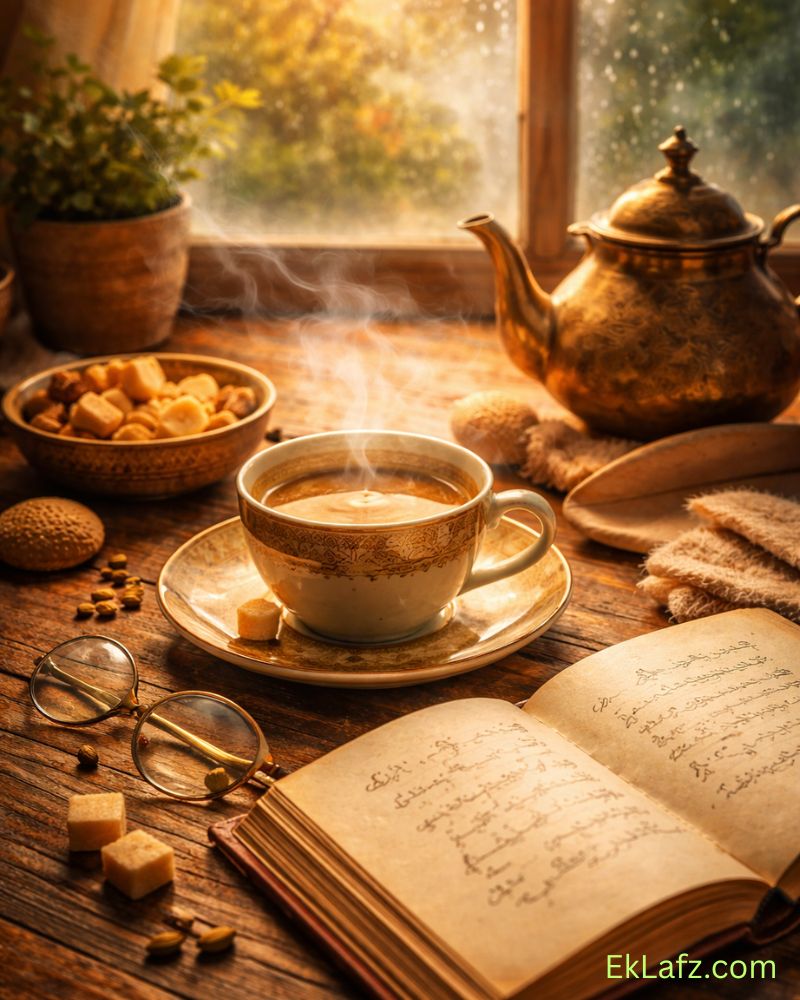
Poems that celebrate quiet mornings, reading, or gazing out the window with a steaming cup.
2. Love & Romance (محبت و عشق)
Tea as a shared ritual between lovers, or a metaphor for longing and warmth.
3. Nostalgia & Memories (یادیں و ماضی)
Lines that recall old friends, family, and cherished moments over chai.
4. Everyday Life & Humor (روزمرہ زندگی و مزاح)
Lighthearted verses capturing the mundane joys, chai breaks at work, or the quirky tea moments.
Famous Examples of Chai Poetry in Urdu Text
Here are a few sample lines showcasing the essence of chai poetry:
“چائے کی پیالی میں چھپی ہیں یادیں پرانی
گرم محبت کے لمحے، خوشبو میں کہانی”
Translation:
“In a cup of tea hide old memories,
Moments of warm love, stories in its aroma.”
Another evocative verse:
“اک چائے کی پیالی، اور خاموشی کی محفل
زندگی کے کچھ پل، بنتے ہیں سنہری لمحے”
Translation:
“A cup of tea, a gathering of silence,
Life’s fleeting moments turn into golden memories.”
These simple lines demonstrate how Urdu poets intertwine emotions, culture, and the sensory experience of tea.
Winter Poetry in Urdu – Beautiful Shayari About Cold Nights and Emotions
How to Write Chai Poetry in Urdu
If you want to try writing chai poetry, here are some tips:
1. Focus on Sensory Details
Describe aroma, color, steam, and warmth — let readers feel the tea.
2. Connect with Emotions
Link chai to love, solitude, nostalgia, or joy.
3. Use Everyday Imagery
Include simple objects, conversations, or settings — a table, a kettle, or a rainy afternoon.
4. Play with Rhythm & Rhyme
Urdu poetry thrives on musicality; try short rhymes for a cozy feel.
5. Reflect on Moments
Tea poetry works best when it captures a small, meaningful slice of life.
Celebrating Chai Poetry: Events & Communities
Urdu chai poetry enjoys attention in:
Literary gatherings (مشاعرے)
Social media groups sharing tea verses
Tea cafés hosting poetry sessions
Festivals of Urdu literature
These platforms celebrate the subtle beauty of chai and allow poets to connect with enthusiasts worldwide.
Conclusion
Chai poetry in Urdu text transforms the simple act of sipping tea into a world of emotions, stories, and reflections. From nostalgia to love, humor to introspection, Urdu poets have captured the magic of tea in words. Whether you read, write, or simply enjoy chai, this poetic tradition celebrates life’s small yet meaningful moments.