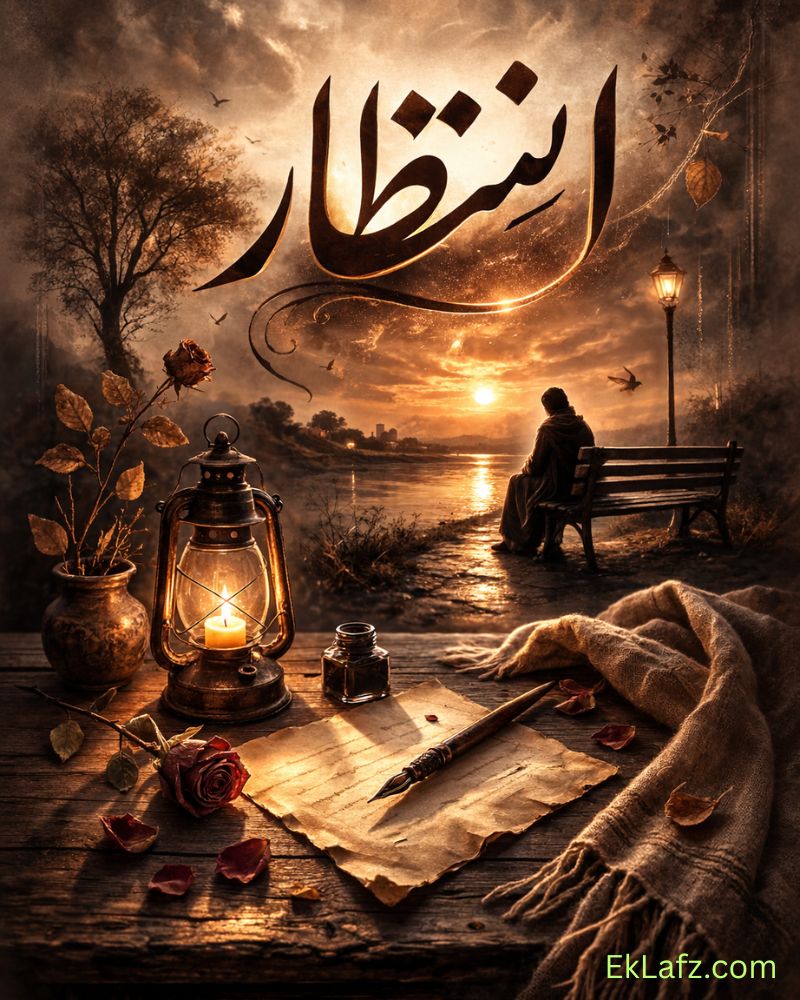
Urdu Poetry on Intezaar: A Reflection of Patience and Longing
In the realm of Urdu poetry, few emotions have been captured with as much depth and beauty as intezaar – the art of waiting. Whether it’s the longing for a loved one, the hope for a brighter future, or the silent patience amidst turmoil, waiting is an emotion many poets have explored in their works. The word ‘intezaar’ brings with it a sense of anticipation and longing, yet also encapsulates the power of hope and desire.
Urdu poetry, with its melodious rhythm and evocative language, has a unique way of portraying this sentiment. The poets, through their verses, take us on an emotional journey where waiting becomes more than just an act – it is a reflection of the heart’s deepest yearnings. In this blog, we explore the theme of intezaar in Urdu poetry through the works of renowned poets.
1. Mirza Ghalib: The Master of Longing and Desire
One of the most famous Urdu poets whose work encapsulates the essence of intezaar is Mirza Ghalib. Known for his intense emotional depth and philosophical outlook, Ghalib often painted the picture of love laced with pain, and the waiting that came along with it. In his poetry, waiting isn’t simply about the passage of time – it’s a poignant reflection on the fragility of life, the uncertainty of fate, and the eternal yearning for something beyond reach.
Here’s a verse from Ghalib that beautifully reflects the feeling of longing:
“Zakhmon ko apne saabit karne ka ek tareeqa tha,
Intezaar mein uska, waqt kaise guzaar karta tha.”
(There was a way to prove the wounds I carried,
In her waiting, I would spend time in agony.)
Ghalib’s poetry reflects not just the sadness of waiting but the self-awareness that comes with it. His longing for the beloved is not only about waiting for their arrival but also about reflecting on the self and the impermanence of the waiting itself.
2. Allama Iqbal: The Poet of Hope and Resilience
While Mirza Ghalib’s poetry often centered around melancholic longing, Allama Iqbal approached intezaar from a different perspective. Iqbal, the philosopher-poet, infused his works with a sense of hope, resilience, and the strength that comes with waiting for a better tomorrow.
For Iqbal, intezaar was not just about waiting in silence for a loved one but about waiting for the future to unfold, for the rise of a new dawn. His poetry encouraged individuals to rise above despair, to wait for the right moment, and to build the strength to achieve their goals.
Here’s an excerpt from Iqbal’s poetry that touches on this theme:
“Intezaar ka safar hai, magar manzil nahin,
Jab tak na ho yaqeen, har raasta ruka rahe.”
(The journey of waiting exists, but there is no destination,
Until belief is certain, every path will remain blocked.)
Iqbal’s verse suggests that waiting is not a passive act; it is a journey full of self-reflection, growth, and, ultimately, fulfillment. The pain of waiting is not in vain; it is a preparation for something greater that awaits.
3. Faiz Ahmed Faiz: The Intersection of Love and Revolution
Faiz Ahmed Faiz was another Urdu poet whose work often depicted the complexities of waiting, especially when entwined with love and revolution. For Faiz, intezaar was not limited to waiting for a lover but extended to the waiting for societal change and justice.
Faiz’s poetry also highlighted the emotional toll of waiting for a loved one, but it often hinted at resilience and eventual triumph. One of his famous lines about waiting is:
“Intezaar bhi aisa tha ki waqt ka har pal,
Dil mein na ho, toh zindagi jaise dard ho.”
(The wait was such that every passing moment,
If not felt in the heart, seemed like an endless pain.)
In Faiz’s poetry, waiting is imbued with a sense of personal and collective longing. He believed that love and hope could coexist with the pain of waiting, and that this waiting could lead to a brighter future – both in love and in life.
4. Ahmed Faraz: The Poet of Heartfelt Longing
Another iconic poet, Ahmed Faraz, is known for his emotional verses. They explore the theme of unrequited love, longing, and the pain of waiting. Faraz’s poetry is deeply romantic. Overall, his reflections on love and waiting resonate with anyone who has ever longed for someone.
Faraz’s words express the agonizing yet beautiful reality of waiting for someone who might never return. One of his verses on waiting goes as:
“Dil mein kuch aise intezaar tha,
Wo aayenge, yeh khwaab tha.”
(There was a wait in my heart so intense,
It was a dream, thinking they would come.)
Faraz’s poetry often delves into the vulnerability of love. Also on the lingering desire that comes with waiting for a person who might never fulfill that expectation. His words echo the silent suffering of many who wait for the impossible.
5. Ahmed Nadeem Qasmi: Patience Amidst Separation
Ahmed Nadeem Qasmi, a name that rings familiar in the world of Urdu literature, was not just a poet but a symbol of profound reflection. Qasmi’s poetry is known for its simplicity, yet the emotions expressed are deep and timeless. His verses are often nostalgic and melancholic, filled with yearning for the past or for a loved one far away.
Qasmi captured the essence of waiting in the most subtle yet poignant manner. A line from one of his poems reads:
“Intezaar karte karte, waqt ki narm hawaon mein,
Jo cheezein kho gayi thi, wo mil gayi thi.”
(While waiting, in the soft winds of time,
The things lost, were found again.)
For Qasmi, waiting was both painful and redemptive. His words reflect the personal journey that one undergoes during a period of longing, finding beauty even in the wait itself.
Conclusion
Urdu poetry on intezaar transcends the mere act of waiting for someone or something. It captures the essence of human experience – the bittersweet, hopeful, and sometimes excruciating moments of longing. Whether it’s Ghalib’s melancholic reflections, Iqbal’s hopeful resilience, Faiz’s love for revolution, Faraz’s unrequited love, or Qasmi’s nostalgic patience, each poet offers a unique perspective on what it means to wait.
In every verse, intezaar becomes a journey. A testament to the depth of the human heart and the power of hope that sustains it. Through these words, we are reminded that waiting, in all its forms, is not just an absence of action but a space for growth, self-reflection, and anticipation for what is to come.
Related Poetry:
“Jab bhi milte hain, to intezaar ka mazaa hai” – A reflection of the joy hidden in the act of waiting.
“Intezaar ki wo raat bhi kitni shaandaar thi” – A celebration of patience in love.
“Intezaar mein hai kuch khaas baat, jo sab nahi samajhte” – The quiet mystery of waiting that only a few can understand.
These verses are reminders that intezaar is not only a wait but also an essential part of the emotional journey that shapes our lives.