
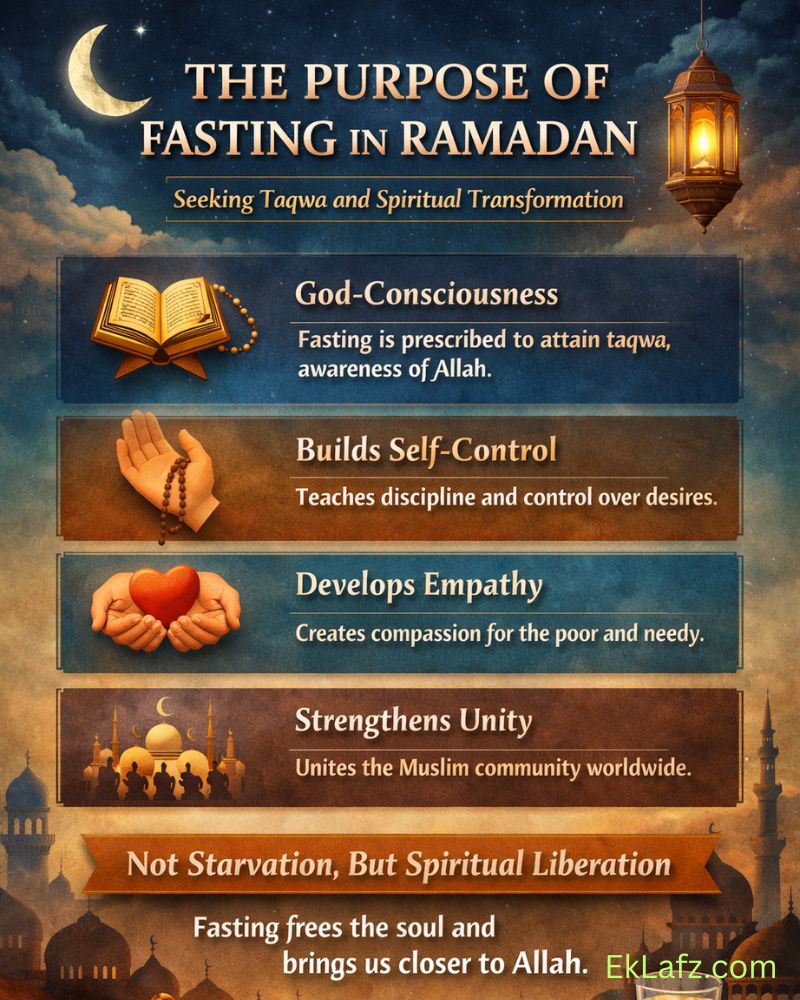
Purpose of Fasting: Why Muslims Fast in Ramadan
Purpose of Fasting: Why Muslims Fast in Ramadan
Every year, millions of Muslims around the world observe fasting during the holy month of Ramadan. From dawn until sunset, they abstain from food, drink, and physical desires. To an outsider, fasting may appear to be a physical challenge or a ritual of self-denial. But in reality, the purpose of fasting goes far deeper than hunger and thirst.
Ramadan fasting is a divine system designed to transform the human being — spiritually, mentally, emotionally, and socially.
The Quranic Purpose of Fasting: Attaining Taqwa
Allah clearly explains the purpose of fasting in the Quran:
“O you who believe, fasting has been prescribed for you as it was prescribed for those before you, so that you may attain taqwa.”
Taqwa means God-consciousness — living with awareness of Allah in every action, choice, and intention. This is the real purpose of fasting.
Fasting trains the heart to remain aware of Allah even when no one is watching. During the fast, a person could easily drink water in secret or eat when alone, yet they choose not to. This silent restraint builds sincerity and strengthens the connection between the servant and Allah.
Fasting Builds Sincerity and Self-Control
One of the most powerful aspects of fasting is that it is an act of worship known only to Allah. Other forms of worship may be visible to people, but fasting happens internally.
Through fasting:
Desires are weakened
Self-discipline is strengthened
The soul learns control over the body
A fasting person realizes that hunger does not control them — they control their hunger. This discipline carries over into daily life, helping believers resist sins, bad habits, and impulses.
Psychologically, fasting breaks dependence on constant comfort. Spiritually, it cleans the heart so guidance can enter more easily.
The Purpose of Fasting and Character Transformation
Ramadan is not just about staying hungry — it is about changing behavior. The Prophet ﷺ taught that if fasting does not stop a person from lying, anger, or harming others, then its purpose is incomplete.
The purpose of fasting includes:
Developing patience
Controlling anger
Softening speech
Increasing humility
This is why Ramadan goals should never be limited to Quran recitation or prayer alone. Improving character is a central objective of fasting.
Fasting Develops Empathy for the Poor
Hunger has a powerful effect on the heart. When a fasting person feels thirst and hunger, they experience a small portion of what the poor feel daily.
This creates empathy and compassion. As a result:
Charity increases in Ramadan
Hearts soften toward others
Social responsibility strengthens
The purpose of fasting is not isolation, but connection — connection to Allah and connection to humanity. Ramadan reminds us that blessings are not guaranteed and generosity is a duty.
Social and Global Impact of Fasting
Fasting unites Muslims across cultures, countries, and languages. From villages to major cities, Muslims begin and end their fasts together, pray together, and share meals.
Socially, fasting:
Strengthens family bonds through suhoor and iftar
Encourages community prayers and gatherings
Creates a shared spiritual rhythm worldwide
This collective worship reinforces identity, brotherhood, and unity.
Spiritual Liberation, Not Starvation
A common misconception is that fasting is about punishment or deprivation. In reality, fasting is liberation.
It frees the soul from:
Endless consumption
Addiction to desires
Slavery to routine pleasures
By stepping away from constant eating, scrolling, and entertainment, the heart finds space to reconnect with Allah. This is why proper Ramadan preparation matters — so the fast becomes meaningful, not mechanical.
Preparing for the Purpose of Fasting
Without intention and preparation, Ramadan can pass quickly with little impact. True success requires planning.
Effective Ramadan preparation includes:
Setting clear spiritual and personal goals
Planning worship routines
Reducing distractions before Ramadan begins
When Muslims define their Ramadan goals — whether improving prayer, character, or discipline — fasting becomes purposeful rather than habitual.
The Lasting Purpose of Fasting Beyond Ramadan
The true test of fasting is what remains after Ramadan ends. If fasting:
Improves self-control
Softens character
Strengthens faith
Then its purpose has been fulfilled.
Fasting is not meant to be a temporary state. It is a training ground for the entire year — teaching restraint, awareness, empathy, and devotion.
Conclusion: Understanding the Purpose of Fasting
The purpose of fasting is not hunger.
It is:
- taqwa
- starvation
- freedom
- not ritual
- transformation.
Ramadan fasting reshapes the believer from the inside out — spiritually awakening the heart, disciplining the soul, and reconnecting humanity to its Creator.
Those who understand this purpose do not simply “get through” Ramadan — they leave Ramadan changed.