The Beauty of Islamic Poetry in Urdu: Where Faith Meets the Heart
What Makes Islamic Poetry in Urdu So Powerful?
Poetry speaks when the heart overflows, but when poetry is rooted in faith, it becomes a path toward spiritual awakening. Islamic poetry in Urdu holds a unique place in literature because it blends devotion, emotion, and reflection in a way that touches the soul deeply. It is not just art — it is remembrance of Allah, love for the Prophet ﷺ, and a reminder of the temporary nature of this world.
The beauty of Urdu as a language enhances this spiritual expression. Its softness, rhythm, and emotional depth make themes like sabr (patience), tawakkul (trust in Allah), repentance, and divine love feel personal and intimate. That is why readers often feel spiritually moved after reading Islamic poetry in Urdu, as if the verses are speaking directly to their hearts.
Faith, Reflection, and the Journey of the Soul
This genre of poetry reminds believers that life is a journey toward Allah. It encourages reflection on the Hereafter, humility before the Creator, and gratitude for His blessings. Many verses express longing for closeness to Allah, turning poetry into a form of dua.
The Influence of Great Islamic Poets
A powerful contributor to Islamic poetic thought is Allama Iqbal. His poetry awakened Muslims to their spiritual dignity and inner strength. Through his verses, faith becomes dynamic, not passive. Readers seeking inspiration often explore Allama Iqbal Poetry in Urdu to understand how poetry can motivate both spiritual and personal growth.
Consider his famous lines:
خودی کو کر بلند اتنا کہ ہر تقدیر سے پہلے“
”خدا بندے سے خود پوچھے بتا تیری رضا کیا ہے
This verse teaches that spiritual elevation comes through self-discipline and faith — a core message of Islamic thought.
Why People Are Drawn to Islamic Poetry Today
Islamic poetry also expresses love and longing for the Prophet Muhammad ﷺ. Poets write about Madinah, mercy, and the character of the Messenger, following the tradition of praising the best of creation, Muhammad. Such poetry softens the heart and strengthens emotional connection with faith.
The influence of classical spiritual poets like Rumi can also be felt in Urdu Islamic poetry. His themes of divine love and surrender resonate deeply in Urdu literature, showing that the language of the soul is universal.
Readers who appreciate spiritual themes often explore Urdu Poetry Blogs to discover different poetic styles, while those specifically seeking faith-centered verses turn to collections of Islamic Poetry in Urdu for deeper reflection.
A Tradition That Continues
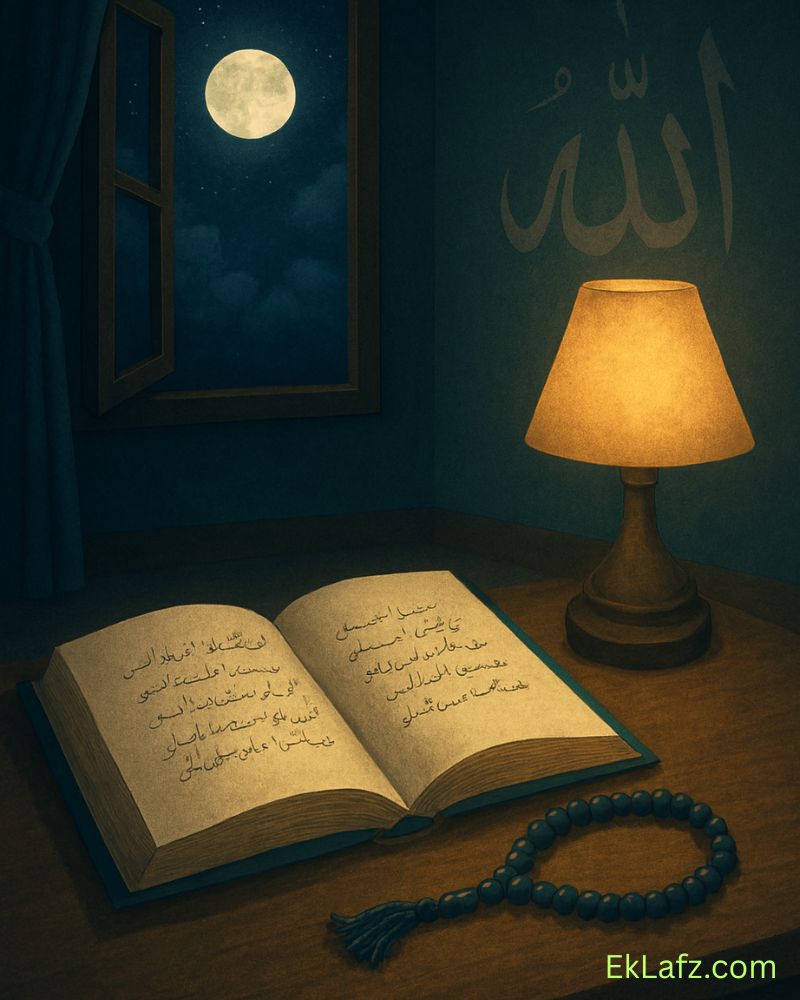
In a world filled with noise, stress, and distraction, Islamic poetry offers stillness. It invites the heart to pause, reflect, and reconnect with Allah. Whether shared in gatherings, posted on social media, or read quietly at night, these verses nurture peace within.
Poetry reaches parts of the heart where lectures cannot. That is why Islamic poetry in Urdu continues to inspire generations — not only as literature but as spiritual guidance.
On eklafz.com, words are not just written; they are felt, remembered, and lived.